

Publications

Our Contributions to Knowledge – Please have a look at our most recent publications.

ALL

Consistent phase-field modeling of dynamic ductile fracture in shear-deformable curved shells

No. 32

Consistent phase-field modeling of dynamic ductile fracture in shear-deformable curved shells

Van-Hoi Nguyen, Minh-Chien Trinh, Hyungmin Jun†

International Journal of Plasticity, 203:104751

2026. 06. 18

IF 15.4, JCR Top 1.4%

Article
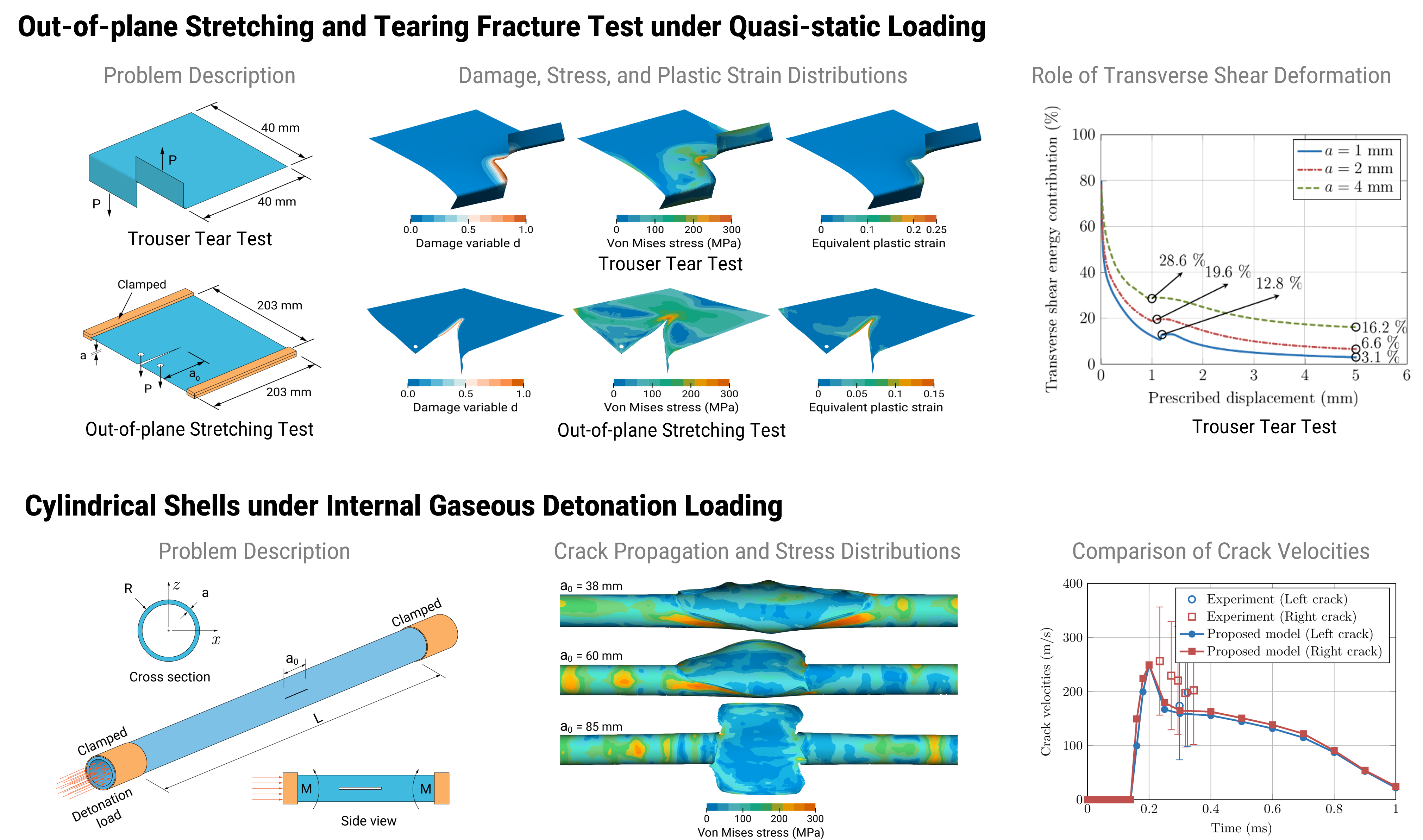
Consistent phase-field modeling of dynamic ductile fracture in shear-deformable curved shells

Shear-Deformable Phase-Field Fracture Framework

This study develops a consistent phase-field framework for dynamic ductile fracture in curved shells. It integrates transverse shear deformation, plane-stress plasticity, and coupled geometric and material nonlinearities within a robust shell formulation.

Numerical Benchmarks and Fracture Predictions

Numerical benchmarks reproduce published fracture responses under static and dynamic loading. The framework captures crack initiation, propagation, curving, branching, and crack-tip velocities in thin and moderately thick shells.

A novel stability-preserving load regulation for coupled thermomechanical buckling optimization of shell structures

No. 31

A novel stability-preserving load regulation for coupled thermomechanical buckling optimization of shell structures

Thanh Thien Banh, Minh-Chien Trinh, Hyungmin Jun†

Computer Methods in Applied Mechanics and Engineering, 453:118809

2026. 05. 01

IF 7.6, JCR Top 1.8%

Article
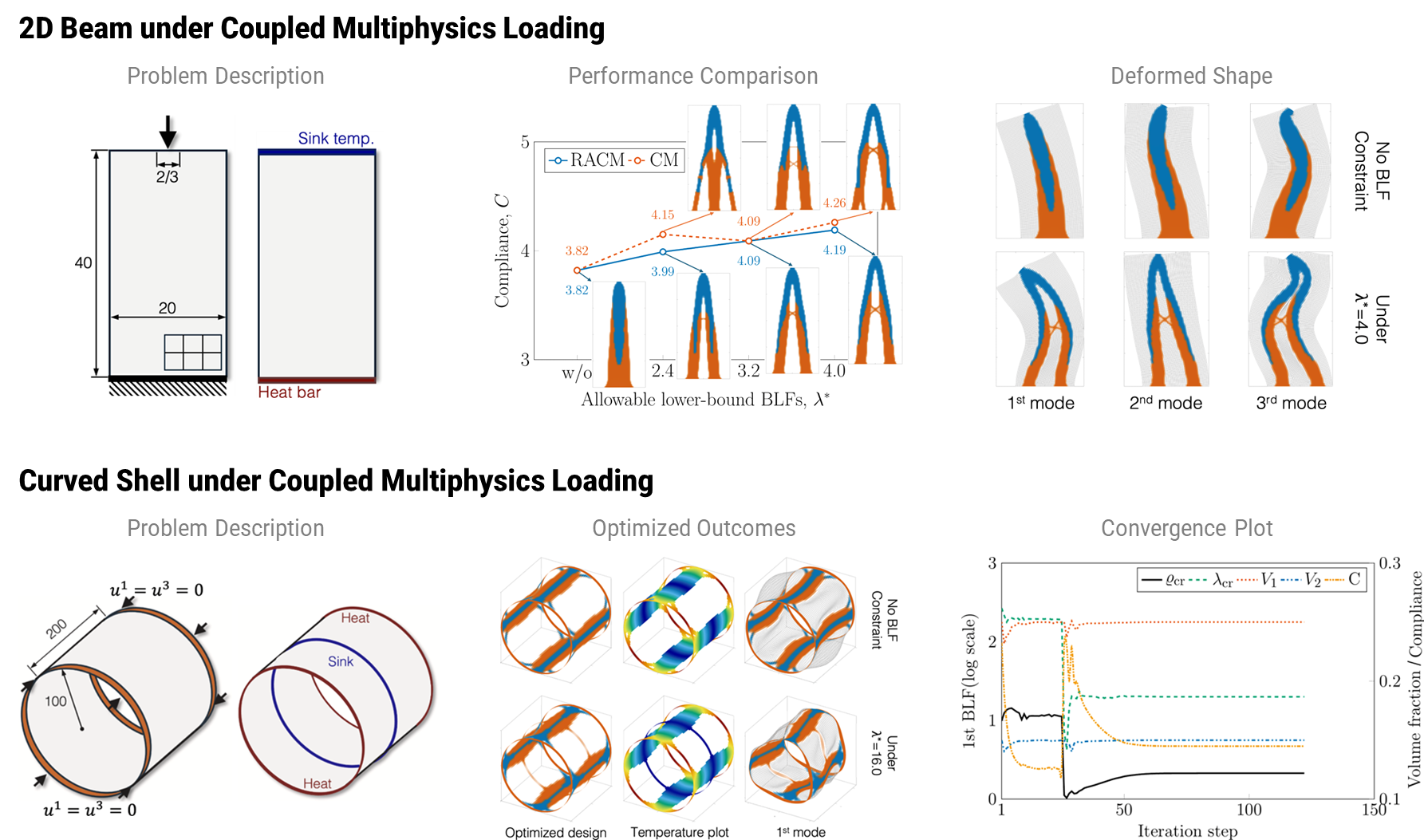
A novel stability-preserving load regulation for coupled thermomechanical buckling optimization of shell structures

Stability-Preserving Load Regulation (SPLR) for Thermomechanical Buckling

To resolve numerical instabilities in conventional buckling analyses, this study introduces the SPLR scheme. This maintains the positive definiteness of the stiffness matrix throughout the optimization process and suppresses complex eigenvalues, ensuring reliable and physically meaningful buckling evaluations.

Multimaterial Topology Optimization and RACM Application for Shells

The Refined Adaptive Continuation Method (RACM) is extended to multimaterial systems to enhance convergence and numerical robustness. Furthermore, using the MITC4 element eliminates shear locking, thereby optimizing the thermomechanical buckling performance of complex curved shell structures.

A novel stability-preserving load regulation scheme for thermoelastic vibration optimization

No. 30

A novel stability-preserving load regulation scheme for thermoelastic vibration optimization

Thanh Thien Banh, Minh-Chien Trinh, Hyungmin Jun†

Engineering with Computers, 42:50

2026. 02. 17

IF 7.0, JCR Top 3%

Article
Partition of unity-based tetrahedral element for nonlinear structural analysis of nearly incompressible hyperelastic materials

No. 29

Partition of unity-based tetrahedral element for nonlinear structural analysis of nearly incompressible hyperelastic materials

Taejung Lim, Minh-Chien Trinh, Hyungmin Jun†

Finite Elements in Analysis and Design, 254:104464

2026. 02. 01

IF 3.8, JCR Top 1.3%

Article
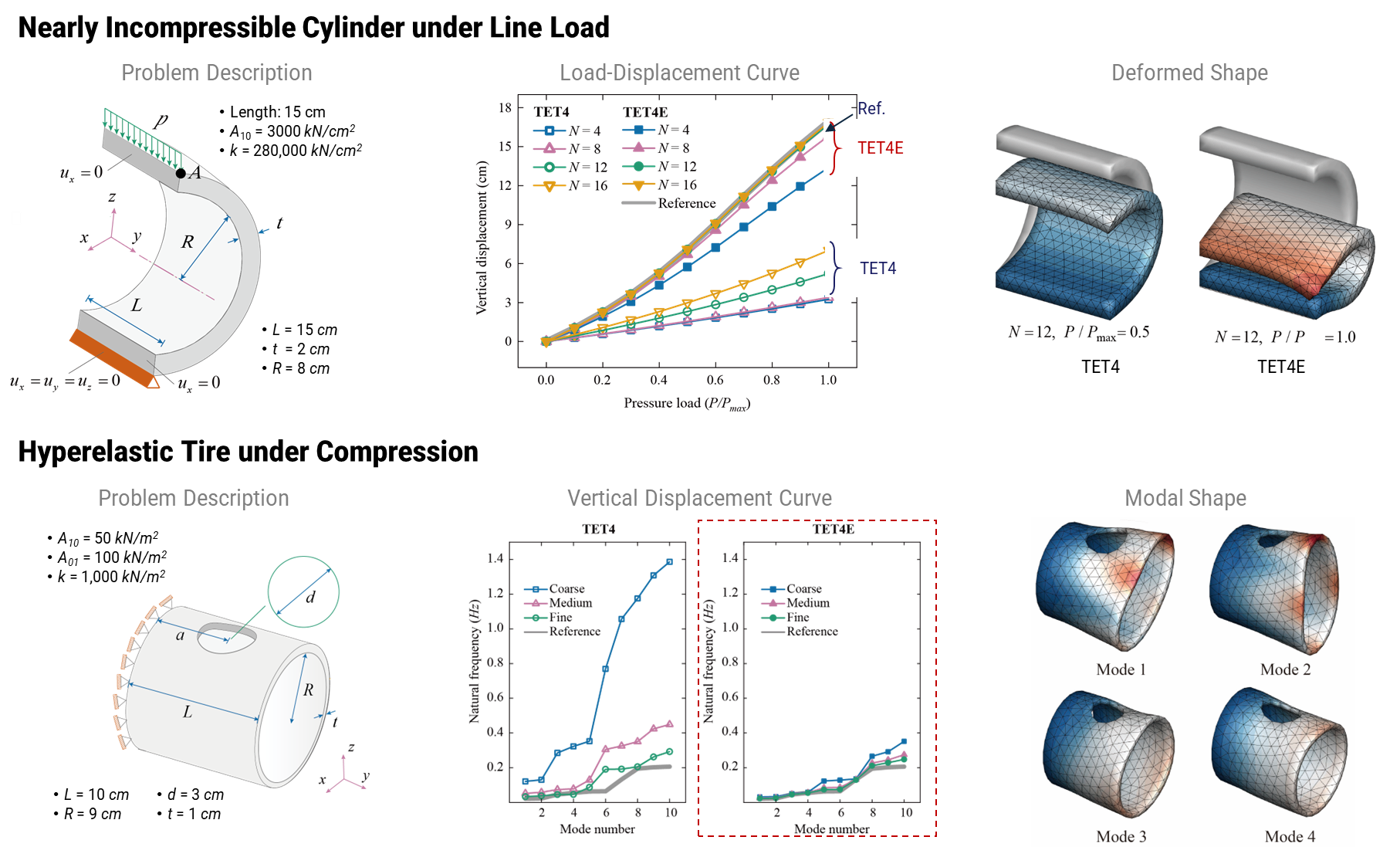
Partition of unity-based tetrahedral element for nonlinear structural analysis of nearly incompressible hyperelastic materials

Development of the Partition of Unity-based Four-node Tetrahedral Element

The paper introduces TET4E, a refined element using the Partition of Unity method to enrich displacement fields and eliminate volumetric locking in nearly incompressible materials. It integrates Mooney-Rivlin and Neo-Hookean models within a Total Lagrangian framework to accurately handle large deformations without adding nodes.

Nonlinear Modal Analysis and Numerical Validation

This study validates TET4E using a new iterative procedure for nonlinear modal analysis to capture amplitude-dependent frequencies and mode shapes. Numerical examples, such as soft robots and distorted plates, demonstrate its superior accuracy and convergence over traditional elements, even with coarse meshes.

Computer-aided design software and simulation tools for DNA nanoparticles

No. 28

Computer-aided design software and simulation tools for DNA nanoparticles

Trinh, M.C., Jun, H.†

Advanced Materials Technologies, 11(4):e00438

2026. 02. 19

IF 6.2

Article
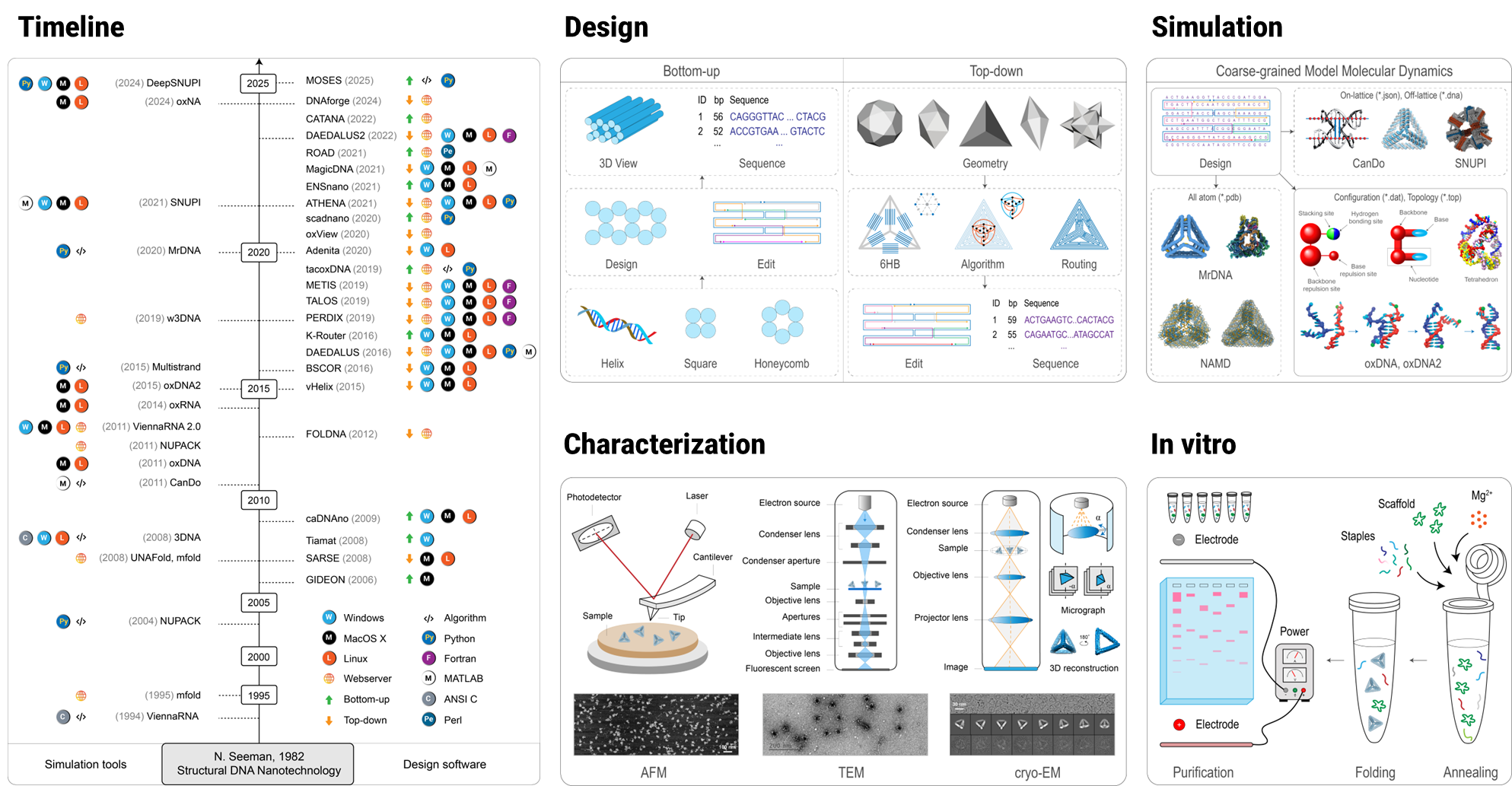
Computer-aided design software and simulation tools for DNA nanoparticles

Classification of DNA Nanoparticle CAD Software

This review chronologically examines computer-aided design (CAD) software designed to overcome limitations of manual design. It categorizes design methodologies into bottom-up and top-down strategies, encompassing tile-based and frame-based architectures.

Simulation Methodologies and Future Prospects

The study classifies simulation tools into finite-element and coarse-grained molecular dynamics models. It highlights future needs, including unified automation platforms and deep learning integration to conserve time and effort.